02/07/2014

Santa Bárbara de Nexe

I.Salteiro, 2014


Santa Bárbara de Nexe


Apesar de o mundo ser simultaneamente
imenso,
macro
e heterogéneo,
tentam fazer-nos passar a ideia
de que ele é global,
plano
e homogéneo.

E quase sempre o conseguem, com muito êxito!

Esta circunstância cria a perigosa sensação de conhecermos o mundo,
quando afinal o que conhecemos
são,
quando muito,
pequenas versões desse mundo.

Mas são estas «versões»
a imposição
com a qual intimamente me insurjo.

Prefiro ser livre!

Somos um centro do mundo
e temos direito à nossa versão do mundo.

É muito difícil compreender por que razão nos escusamos a aceitar esta verdade tão óbvia, para aceitarmos,

por questões de mero comodismo,

as versões do mundo dos outros.
Admitindo sermos vulgares habitantes da caverna de Platão.


O que não devemos ser!.....

Ilídio Salteiro, 2014.

14/05/2014

Aberto Caeiro, Seja o que for que esteja no centro do Mundo......

Alberto Caeiro

Seja o que for que esteja no centro do Mundo, 
Deu-me o mundo exterior por exemplo de Realidade, 
E quando digo "isto é real", mesmo de um sentimento, 
Vejo-o sem querer em um espaço qualquer exterior, 
Vejo-o com uma visão qualquer fora e alheio a mim.
Ser real quer dizer não estar dentro de mim.

Da minha pessoa de dentro não tenho noção de realidade.
Sei que o mundo existe, mas não sei se existo.
Estou mais certo da existência da minha casa branca
Do que da existência interior do dono da casa branca.
Creio mais no meu corpo do que na minha alma,
Porque o meu corpo apresenta-se no meio da realidade.
Podendo ser visto por outros,
Podendo tocar em outros,
Podendo sentar-se e estar de pé,
Mas a minha alma só pode ser definida por termos de fora.  
Existe para mim — nos momentos em que julgo que efetivamente
        existe —
Por um empréstimo da realidade exterior do Mundo

Se a alma é mais real
Que o mundo exterior como tu, filósofos, dizes,
Para que é que o mundo exterior me foi dado como tipo da realidade"

Se é mais certo eu sentir
Do que existir a cousa que sinto —
Para que sinto
E para que surge essa cousa independentemente de mim
Sem precisar de mim para existir,
E eu sempre ligado a mim-próprio, sempre pessoal e intransmissível?
Para que me movo com os outros
Em um mundo em que nos entendemos e onde coincidimos
Se por acaso esse mundo é o erro e eu é que estou certo? 
Se o Mundo é um erro, é um erro de toda a gente.
E cada um de nós é o erro de cada um de nós apenas.  
Cousa por cousa, o Mundo é mais certo.

Mas por que me interrogo, senão porque estou doente?
Nos dias certos; nos dias exteriores da minha vida, 
Nos meus dias de perfeita lucidez natural,
Sinto sem sentir que sinto,
Vejo sem saber que vejo,
E nunca o Universo é tão real como então,
Nunca o Universo está (não é perto ou longe de mim.  
Mas) tão sublimemente não-meu.

Quando digo "é evidente", quero acaso dizer "só eu é que o vejo"?
Quando digo "é verdade", quero acaso dizer "é minha opinião"?
Quando digo "ali está", quero acaso dizer "não está ali"?
E se isto é assim na vida, por que será diferente na filosofia?
Vivemos antes de filosofar, existimos antes de o sabermos,
E o primeiro fato merece ao menos a precedência e o culto.

Sim, antes de sermos interior somos exterior.
Por isso somos exterior essencialmente.

Dizes, filósofo doente, filósofo enfim, que isto é materialismo.
Mas isto como pode ser materialismo, se materialismo é uma filosofia,
Se uma filosofia seria, pelo menos sendo minha, uma filosofia minha,
E isto nem sequer é meu, nem sequer sou eu?

02/05/2014

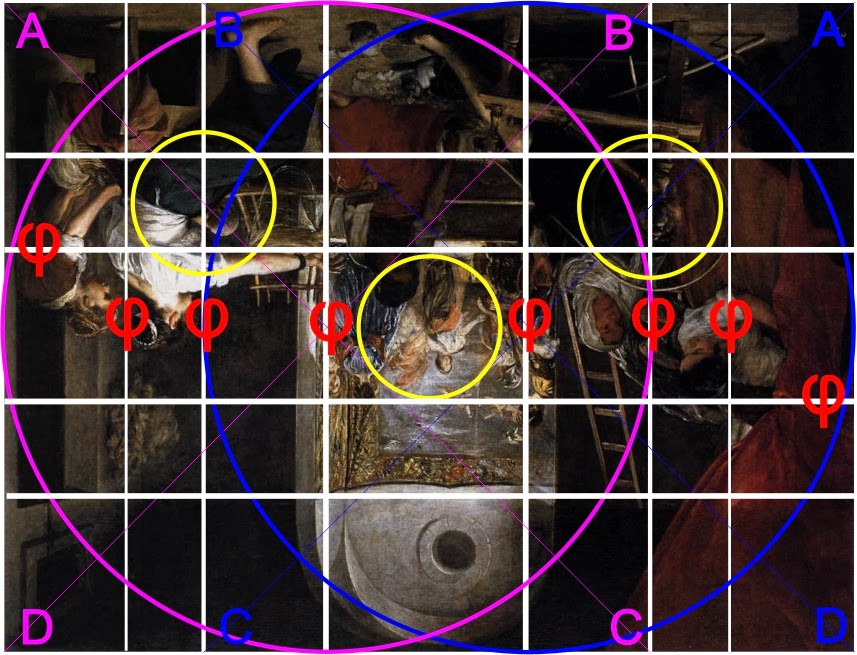
Diego Velázquez - Las hilanderas ou La fábula de Aracne, 1660.

How many solutions has the world?


Diego Velázquez.
Las hilanderas ou La fábula de Aracne, 1660.
Óleo sobre tela,  220 cm x 289 cm.
  Ilidio Salteiro, 2014

26/04/2014

Diego Velázquez, A Fábula de Aracne, 1660


Diego Rodríguez de Silva y Velázquez, Las hilanderas, o La fábula de Aracne, 1655 – 1660.
Óleo sobre Lienzo, 220 cm x 289 cm.

O mito clássico de Aracne segundo a narrativa de Ovidio (Metamorfosis, Libro VI, I)

29/03/2014

Segurança? (III)

Safety in Numbers?
Um artigo publicado na Frieze, março 2014.
www.frieze.com/issue/article/safety-in-numbers/


Algorithms, Big Data and surveillance: what’s the response, and responsibility, of art? Jörg Heiser asked seven artists, writers and academics to reflect.


JORDAN ELLENBERG
In the current moment, we are experiencing a sense of being tracked and measured by a cabal of machines whose genius is to distil the particulars of our lives into a substance called ‘data’. The machines (and by extension their handlers) then use this data to make inferences about our behaviour, our associations and our beliefs – information that we haven’t intentionally revealed or which we perhaps don’t even have access to ourselves.
Spooky, right? And seemingly antipodal to the kind of insight that art is supposed to provide: mechanical where art is human, repetitive where art is inventive. The machines that watch us can seem like H.G. Wells’s Martians: ‘minds that are to our minds as ours are to those of the beasts that perish, intellects vast and cool and unsympathetic’ which peer down at the aggregate trail we leave in the informational substrate, and thus at us, ‘as a man with a microscope might scrutinize the transient creatures that swarm and multiply in a drop of water’.
But what machines do with data is not so foreign. It appears foreign, because when we talk about data we do so in the language of mathematics: loss functions and kernels, logistic regression and Greek letters. The language presents the same kind of difficulty for outsiders as the international art-speak found on museum wall texts.
Quantitative surveillance has two main goals: to classify and, having classified, to predict. And prediction comes down to this: people are likely to do things in the future that people like them did in the past. This principle – that we have tendencies, which are not inescapable but which take some work or some luck to escape – is not the property of mathematicians. How would novels function without it?
And the project of classification – which is to say all the work that’s hidden in the word ‘like’ or the phrase ‘people like them’ – is nothing more than the project of analogy, which asks us to set aside the boring observation that no two human beings (and, likewise, no two moments in time, no two societies etc.) are identical to each other, and replace it with a suite of more interesting questions, such as: in the space of human beings, which people are near each other? Or, when are two things alike, in ways beyond the obvious ones? That, of course, is a traditional artistic project too.
Big Data, automated behaviour prediction and classification relate to traditional art forms as photography does to drawing and painting. Photography isn’t there to replace artistic representation; in some of its manifestations it’s a new form of artistic representation, and in all its forms it’s something art can talk about, without acquiring expertise in photoreactive chemistry or digital compression algorithms. It will be the same story here.
And if you regard surveillance as a thing to be resisted, take some comfort from the fact that Wells’s Martians were eventually felled by terrestrial microorganisms. They were different from us on the surface. But on the inside, where they were vulnerable, they were built much as we are.
  

Jordan Ellenberg is Professor of Mathematics at the University of Wisconsin, USA. He is a regular columnist forSlate and his book How Not to Be Wrong (Penguin, 2014) is forthcoming.

26/03/2014

Segurança? (II)

Safety in Numbers?
Um artigo publicado na Frieze, março 2014.
www.frieze.com/issue/article/safety-in-numbers/

Algorithms, Big Data and surveillance: what’s the response, and responsibility, of art? Jörg Heiser asked seven artists, writers and academics to reflect.

LAURA POITRAS
In a top-secret strategy paper published by The New York Times in November, the US National Security Agency (NSA) describes its current surveillance powers as ‘The Golden Age’(1) of signals intelligence. This ‘Golden Age’ is one where our past is recorded and digitally stored and our future is predicted. It is a system that seeks to know our friends and networks, physical location, biometric data and what we read and write. It is a system with ‘selectors’ and algorithms that watch our private communications moving across the internet to build graphs which identify us as ‘targets’ for further, more invasive, forms of surveillance. Its goal is the ‘mastery’ of global communications.
This document and thousands more dis­closed by Edward Snowden reveal a fun­da­mental threat to freedom.
As George Orwell and Michel Foucault both noted, one of the goals of surveillance is to get inside our heads. They don’t have to be watching – we just need to imagine they are. Every time we think twice before entering a search term, distance ourselves from a person or topic that might be targeted or censor our words, they win.
Surveillance targets our ability to think, create and associate freely. When I sat down to write this, I disconnected my computer from the internet to avoid my writing – the private process of formulating ideas on a page – being monitored.
As surveillance powers expand, so will the circle of people and activities monitored. I have no doubt we will see an increase of surveillance-themed art work, but that misses the larger point. Snowden not only revealed vast secret surveillance programmes, he revealed state control and the power of the individual to resist it. Artists can respond by doing work that resists control and conformity wherever it is encountered. Our responsibility as citizens is to make sure the next generation does not have to censor its thoughts, actions and imaginations.

(1) ‘A Strategy for Surveillance Powers’, The New York Times, 23 November 2013.
Laura Poitras is a filmmaker and journalist. She is currently reporting on NSA abuses disclosed to her by Edward Snowden, and editing the final instalment in a trilogy of films about post-9/11 America that will focus on surveillance.

Depois da ARCO Lisboa 2026 e Edgar Morin

Como o Mundo pode ser dividido de muitas formas, uma delas é a seguinte: por um lado, temos a cultura, por outro temos a ignorância. Seres c...